About the founder
Marice Caballero is a sociolinguistics researcher, French educator, and founder of France Regional. She holds a bachelor’s degree in Foreign Languages, specializing in French, from the University of Havana and an MA in French and Francophone Studies, specializing in linguistics, from the University of Florida. Her work connects regional languages, cultural diversity, and language education.
Her research on Gallo, a Romance language spoken in Upper Brittany, received initial UF support through the J. Wayne Conner Memorial Scholarship and Center for European Studies Travel Grant (2023), with additional travel grants from UF’s College of Liberal Arts and Sciences and Department of Languages, Literatures and Cultures. Her master’s thesis combined observation of linguistic fieldwork with analysis of physical and virtual linguistic landscapes, including websites and web pages, to examine Gallo’s visibility, representation, and use.
France Regional grew out of a challenge she experienced firsthand: finding activities connected with Gallo and organizing her research visits around them. Her experience as a teacher also strengthened her commitment to addressing the limited attention given to regional cultures in French teaching materials. As a researcher, educator, and traveler, she created France Regional to make this living heritage easier to discover. Through interactive maps and cultural information for international audiences, she seeks to connect more people with the events, knowledge, and communities that sustain France’s regional cultures.
Conferences and Research
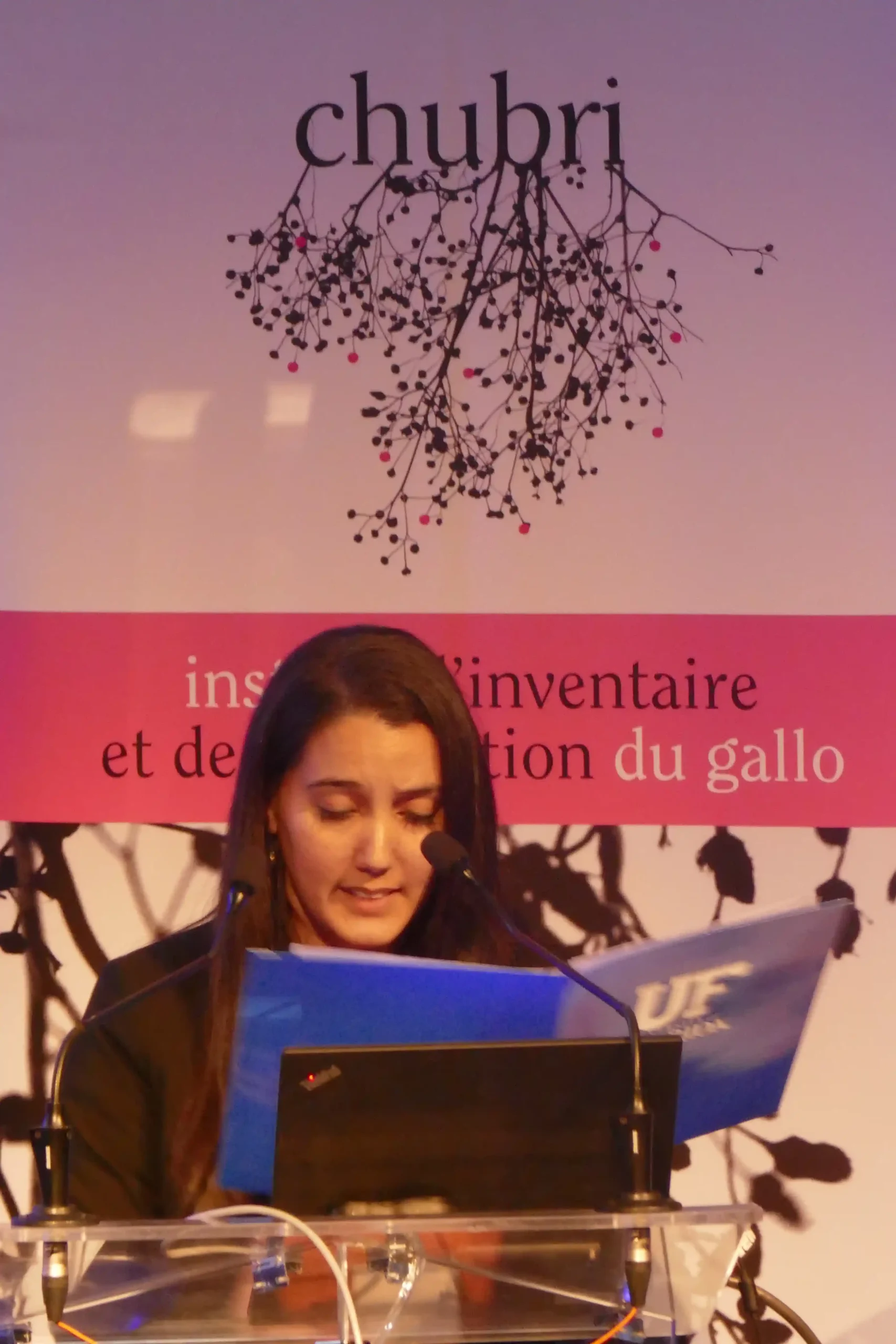
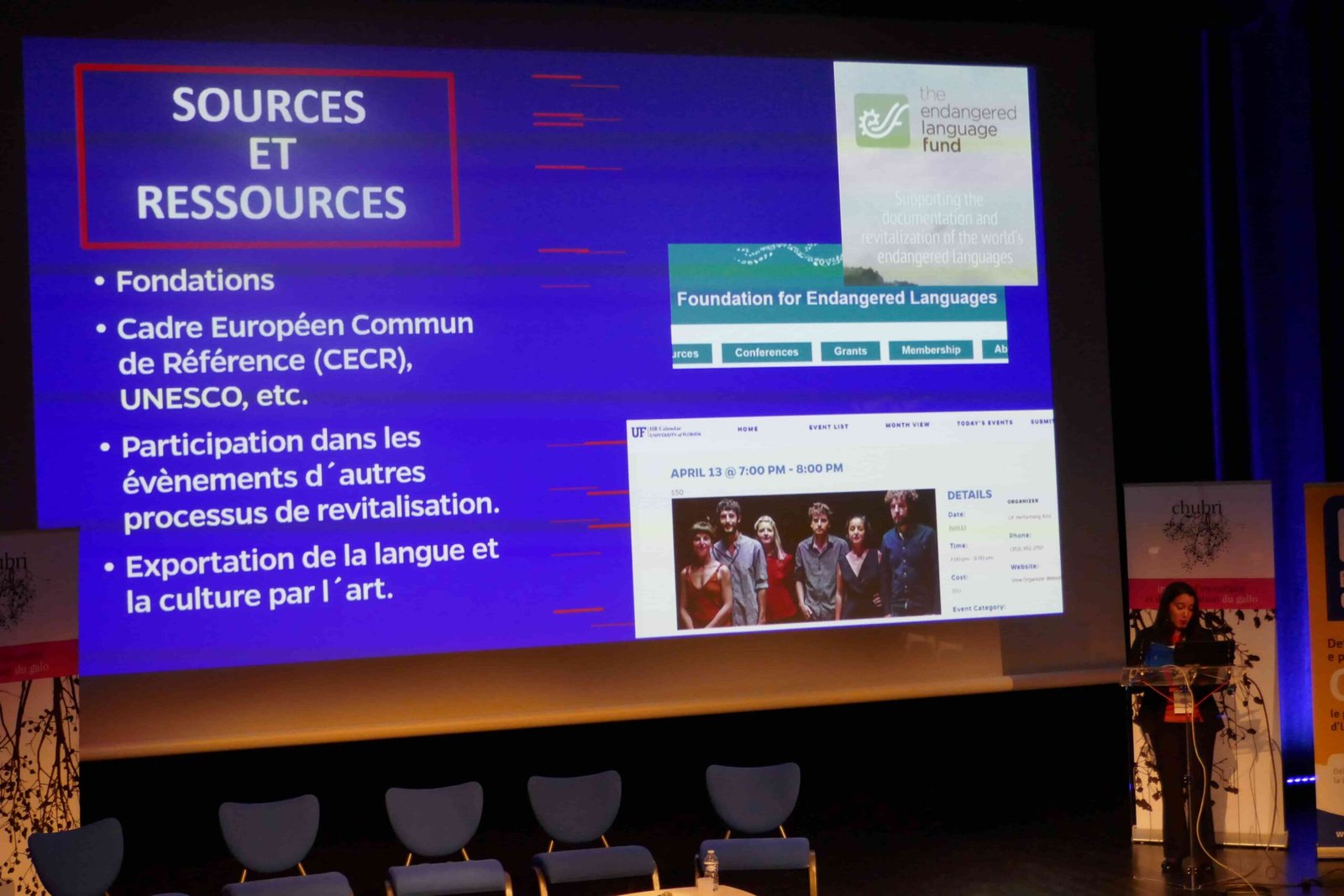
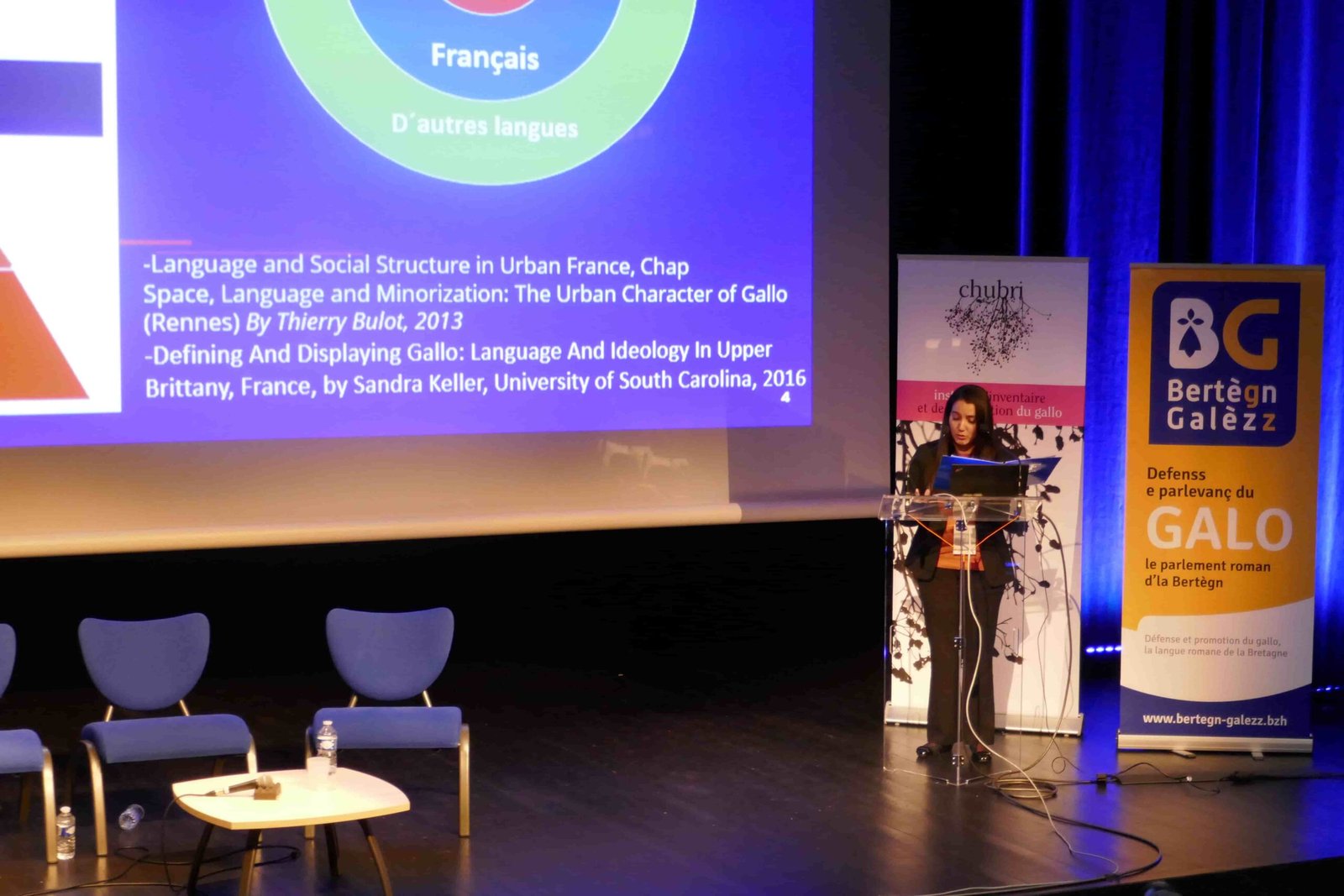
Marice has shared this research with academic audiences in France and the United States. Selected presentations include an invited contribution on the internationalization of Gallo language and culture at the Cultural Rights and Linguistic Revitalization conference in Rennes (2023); “Minority language revitalization beyond regional borders: The case of Gallo” at Florida State University (2024); and “Virtual linguistic landscape in the Gallo language revitalization process” at the Florida Linguistics Yearly Meeting at UF (2024).
Her broader research also explores regional diversity in French language education. Examples include “Las lenguas regionales en la enseñanza del francés como lengua extranjera,” presented at the International Congress on Science and Education in Havana, Cuba (2024). At the South Atlantic Modern Language Association (SAMLA) conferences, she presented “A 30-year diachronic review of France’s regional languages and cultures in the teaching of French as a foreign language” (2024) and “Evaluating the Cultural Scope of French Language Teaching Methods: A Focus on Regional Representation” (2025).
Why FranceRegional Matters
France Regional is being developed to address a practical gap between the existence of regional heritage and the ability to discover, understand, and participate in it. Its purpose is to connect cultural visibility with opportunities to learn from, engage with, and support the people who keep that heritage alive.
Turning visibility into access and participation
FranceRegional organizes cultural information geographically and thematically. Its interactive maps help researchers, educators, and travelers discover events, workshops, and activities connected with regional languages, oral traditions, music, dance, gastronomy, and traditional skills. Links to official event and organizer websites direct readers to the original sources. By progressively developing multilingual information and explaining cultural context, the platform aims to reduce the language and information barriers that can prevent international audiences from participating in local cultural life.
Putting international heritage principles into practice
The UNESCO Convention for the Safeguarding of the Intangible Cultural Heritage (2003) recognizes heritage as living practices, knowledge, and skills that communities transmit and continually recreate, including language as a vehicle of that heritage. Its provisions on awareness, education, and community participation inform FranceRegional’s purpose. Making a tradition visible and explaining its context can help people recognize its value and find opportunities to learn from those who practice it. The communities concerned remain central to how their heritage is understood and shared.
The Council of Europe’s Faro Convention (2005) provides a complementary framework. Article 14 promotes digital access to heritage information and diversity of languages and cultures online; Article 12 emphasizes participation; and Article 10 recognizes heritage’s economic potential while requiring respect for its integrity and inherent values. FranceRegional draws on these principles through its maps, multilingual approach, and links to cultural organizers. Its contribution is to create practical routes from learning about heritage to engaging with the people and places that sustain it.
Why this matters for local and regional economies
Cultural participation can also support local livelihoods. Attending a performance, paying for a workshop, buying an artisan’s work, or purchasing locally made products can bring income to artists, teachers, craftspeople, producers, and cultural associations. Visits may also create demand for nearby accommodation, food, transport, and other services. FranceRegional aims to help local initiatives reach potential participants and customers beyond their existing networks, connecting international cultural interest with opportunities for spending in the places where the heritage is practiced.
This economic objective is consistent with the Congress of Local and Regional Authorities’ Resolution 301 (2010), which recognizes regional and minority languages as resources for regional development, cultural tourism, and heritage work. The cultural value remains equally important: languages, skills, traditions, and collective memory depend on opportunities for continued practice and transmission. FranceRegional seeks to make those opportunities more visible and accessible, linking support for local economic life with respect for the living heritage that gives each region its identity.
France Regional seeks to extend attention to less visible regional practices and languages, making them easier to find and understand while creating more opportunities to engage with—and support—the people who keep them alive.